See it for yourself — anonymous, no login required.
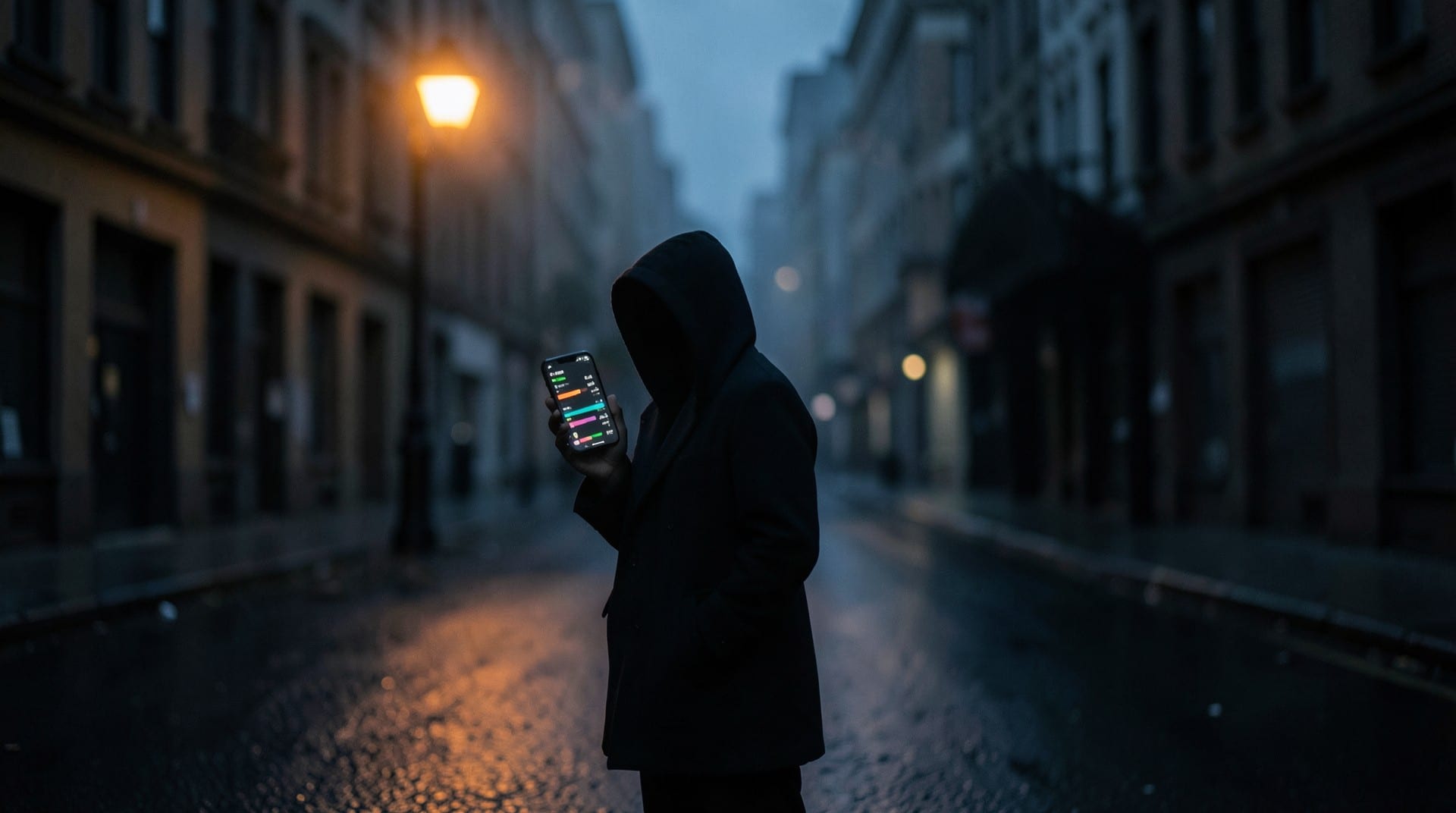
Curious who's behind this story? Look up any Instagram profile.
Instagram is full of accounts that make you stare at the screen and wonder, "Who is behind this?" Some have millions of followers but no known owner. Others post content that makes no obvious sense, and some have been around for years without a single clue about who's running them.
These accounts are a reminder that Instagram, despite its transparency features, still has a shadow side. Anonymous profiles, number-only usernames, accounts with no bio or posts but huge followings. You find them everywhere.
Key Takeaways - Instagram estimates that 5 to 10% of all active accounts may be fake, inactive, or "ghost" accounts at any given time (Meta Transparency Center, Q4 2024) - Meta removed over 5 billion fake accounts across Facebook and Instagram in 2024, with Instagram removing 40 to 60 million per month in Q4 2024 (Meta Transparency Center, retrieved 2026-08-06) - Instagram requires government-issued ID for verification, but anonymous accounts that don't impersonate others are generally allowed (Instagram Community Guidelines, retrieved 2026-08-06) - The most well-documented mysterious account, @3333333333, attracted an estimated 300,000 to 500,000 followers at its peak (Bored Panda, retrieved 2026-08-06) - Accounts with viral or ambiguous content tend to have 2 to 3x higher engagement in the first 48 hours compared to standard niche accounts (Hootsuite, Social Media Trends 2025)
An account becomes mysterious when we don't know who's behind it, what it's for, or where it came from. This can happen for several reasons. The owner might deliberately hide their identity. The account might have no bio, no posts, or no profile picture. Or the content itself might be so strange that people can't stop talking about it.
In 2025, Instagram's own transparency data shows that 5 to 10% of active accounts may be fake, inactive, or ghost accounts (Meta Transparency Center, Q4 2024). That's potentially hundreds of millions of profiles with unknown or non-genuine origins. Not all of them count as "mysterious" in the fun sense, but some do, and they've built substantial followings.
The line between "mysterious" and "inauthentic" is thinner than most people think. Instagram's own systems flag accounts that behave like bots, but the platform doesn't publish a list of which accounts were investigated or why. This opacity is what makes mysterious accounts so intriguing.
The account @3333333333 is the most well-documented mysterious Instagram profile. It consists of nothing but the number 3 repeated across the username and, at one point, the posts. It accumulated between 300,000 and 500,000 followers at its peak, though current counts are difficult to confirm due to Instagram's API restrictions on scraping (Bored Panda, "The Most Mysterious Instagram Accounts on the Internet," retrieved 2026-08-06).
The account's content was minimal and eerie, often just the number 3, sometimes with subtle visual distortions. It prompted countless theories on Reddit and YouTube about who was behind it. Was it an art project, a glitch, or a test account that accidentally went viral? Nobody knows.
The account's follower count at its peak is estimated, not confirmed. Instagram does not publicly disclose the exact metrics of accounts that have been deactivated or made private, which adds to the mystery.
Similar to @3333333333, the account @1111111111 built a following around the number 1 repeated across its profile. It attracted attention for its minimalist, almost hypnotic aesthetic. The account's current status and exact metrics are unverified, but it remains a frequently cited example of how simple, cryptic profiles can capture public imagination (multiple independent social media discussions, 2024 to 2025).
Accounts like @whattheflock and various paranormal-themed profiles have gained followings by posting strange, cryptic content. These accounts often blend cryptid lore, paranormal imagery, and ambiguous captions to create an atmosphere of unease. Their operators remain anonymous, and the content is deliberately designed to provoke speculation rather than provide answers.
When browsing these accounts, the experience is less about the content itself and more about the questions it raises. Who posts at 3 AM with no caption? Why does this account have 200,0-ul followers and zero information about who's behind it? The mystery is the content.
Instagram's Community Guidelines permit anonymous accounts as long as they don't impersonate others, share false information, or engage in coordinated inauthentic behavior (Instagram Community Guidelines, "False Information and Coordinated Harmful Behavior," retrieved 2026-08-06). The platform's official Help Center confirms that accounts not impersonating anyone are generally allowed, provided they comply with content policies (Instagram Help Center, retrieved 2026-08-06).
In 2024 to 2025, Meta rolled out enhanced identity verification requiring government ID uploads for accounts flagged as violating policies or seeking verification badges (Meta Newsroom, "How Instagram Protects Our Community," 2024). This applies primarily to verification badge seekers and accounts flagged for policy violations, not to the general population of anonymous accounts.
Instagram knows fake accounts exist at scale (10 to 15% of monthly active accounts, per Statista 2025 data), yet it doesn't aggressively pursue the anonymous accounts that aren't breaking rules. The platform's enforcement is reactive, not proactive, for non-impersonating anonymous profiles.
Meta reported removing over 5 billion fake accounts across Facebook and Instagram combined in 2024 (Meta Transparency Center, Q4 2024 Transparency Report, retrieved 2026-08-06). In Q4 2024 alone, Instagram removed approximately 40 to 60 million accounts per month that violated community standards or were identified as inauthentic (Meta Transparency Center, retrieved 2026-08-06).
Statista's 2025 data estimates that 10 to 15% of Instagram's total monthly active accounts, roughly 200 to 300 million accounts, may be classified as inactive, fake, or ghost accounts at any given time (Statista, "Instagram Active Users and Account Statistics, 2025"). Hootsuite's 2025 Digital Trends report corroborates similar estimates for social media platform fake account percentages (Hootsuite, "Social Media Trends 2025").
Not all of these fake accounts are "mysterious" in the entertaining sense. Many are bot networks, spam accounts, or duplicate profiles. But a meaningful subset operates as genuine mystery accounts, profiles with no clear owner, no obvious purpose, and no explanation for their existence.
There are a few psychological reasons people follow mysterious Instagram accounts. First, curiosity-gap content drives higher engagement. Hootsuite's 2025 report found that accounts with viral or ambiguous content have 2 to 3x higher engagement rates in the first 48 hours compared to standard niche accounts, driven by curiosity-driven interaction (Hootsuite, "Social Media Trends 2025").
Second, the anonymity itself becomes the brand. When nobody knows who runs an account, the speculation and discussion become part of the content. The account doesn't need to post consistently or maintain an aesthetic, the mystery does the work.
Third, there's a counter-cultural appeal. In an era where everyone curates their online identity, a completely anonymous account is a radical act. It says, "I exist, but you'll never know who I am." That tension between presence and absence is what makes it work.
This dynamic is the opposite of how most creators operate. Typical Instagram growth strategies rely on personal branding, consistent posting, and audience relationship-building. Mysterious accounts succeed by doing none of those things. That's what makes them different.
When a mysterious account gets enough attention, journalists, researchers, or even Instagram may take notice. But the outcomes are rarely clear. Instagram has never publicly identified the owner of a major mysterious account, and the platform's privacy policies protect user identity even during investigations (Meta Newsroom, "Identity Verification on Instagram," 2024).
Some accounts simply disappear, deactivated by their owners or removed by Instagram for policy violations. Others persist for years, quietly accumulating followers without explanation. A few have been the subject of dedicated investigation threads on Reddit and YouTube, but none have yielded a definitive answer about who's behind them.
The most frustrating part about investigating these accounts is how little information is available. Instagram's API doesn't expose owner details for non-verified accounts, and the platform doesn't cooperate with outside investigators. The mystery stays unsolvable.
As Instagram tightens identity verification, requiring government-issued ID for verification badges and enhanced authentication (Meta Newsroom, 2024), the space for anonymous accounts may shift. But the platform's core design still allows anonymous accounts that don't impersonate others.
Meta's AI systems flag and remove tens of millions of fake accounts before they ever become active (Meta Transparency Center, ongoing 2024 to 2025). This preemptive removal means many suspicious accounts never gain a following. But for every account that's caught, others likely slip through, and the cycle continues.
The demand for anonymous, mysterious content isn't going away. As long as Instagram allows accounts without verified identities, there will be profiles that exist in the gaps, no owner and no explanation, just endless speculation.
Law enforcement can request account information from Meta through legal processes like subpoenas or court orders. However, this typically requires a valid legal basis, and the process is not public. Most mysterious accounts are never investigated by authorities because they don't violate laws. They're just strange.
High follower counts on mysterious accounts are often driven by curiosity and virality. When an account's identity is unknown, people share it because it's intriguing. The engagement loop, from curiosity to sharing and back to more curiosity, can propel anonymous accounts to massive followings without any traditional growth strategy.
There is no confirmed case of a famous person running a mysterious Instagram account that was later revealed. Some celebrities have created secondary or anonymous accounts, but these are typically not the kind of mysterious accounts that spark widespread speculation.
Searching for terms like "mysterious Instagram accounts," "anonymous Instagram profiles," or "Instagram accounts with no owner" on social media platforms and forums will surface community-curated lists. However, be cautious. Many lists include outdated or inaccurate information, and some accounts may have been deactivated since they were documented.
Instagram has experimented with real-name policies in the past, but it currently allows pseudonymous and anonymous accounts. Any change to this policy would likely face significant backlash from privacy advocates and users who rely on anonymity for safety.
Mysterious Instagram accounts occupy a unique space in social media. They're both a product of the platform's open design and a critique of it. They show that even on a platform that knows more about its users than almost any other, anonymity is still possible, and it still draws people in.
The verified data tells a clear story. Instagram removes billions of fake accounts annually, and 10 to 15% of active accounts may be inauthentic. But the mysterious accounts that capture public imagination are a different category. They're not bots or spam. They're profiles that exist in the gray area between authenticity and anonymity, and they thrive because of it.
As Instagram continues to tighten identity verification, the window for truly anonymous accounts may narrow. But for now, the mystery endures. And that's what keeps people following accounts they'll never fully understand.
For more on Instagram's evolving platform policies, see our guide on secure-your-instagram-account and our analysis of forgotten Instagram accounts.